
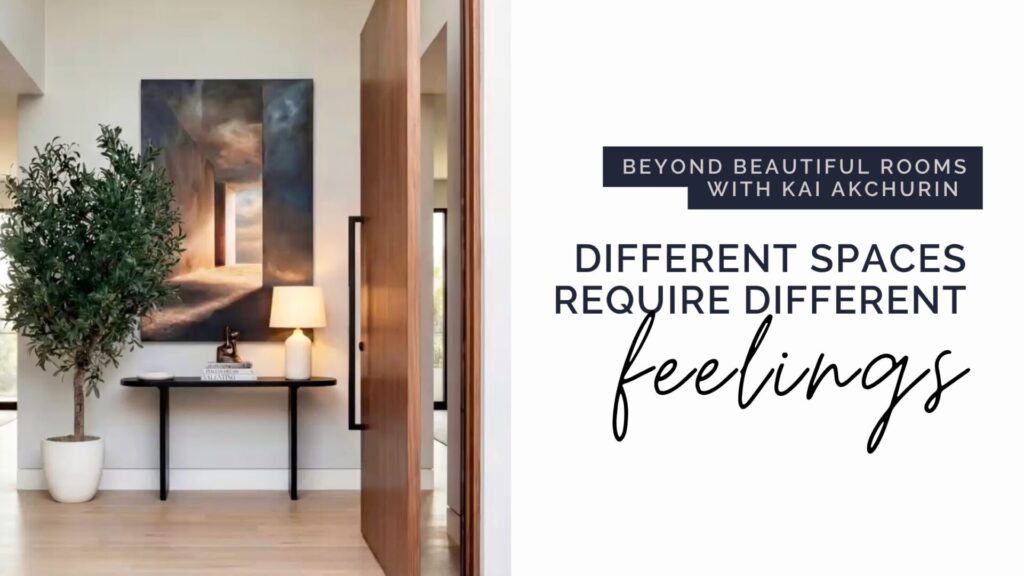
One of the most “ah-ha!” moments from Kai Akchurin’s RESA® webinar, Redefining Luxury Listings Through Sensory and Spatial Strategies, was the idea that the emotional response should evolve as buyers move through a property.
At first, that may sound obvious.
Of course different rooms feel different.
But this conversation went deeper than that.
Kai was not just talking about whether a room feels cozy, elegant, warm, or expensive. He was talking about the strategy behind when a buyer should feel each of those things, and why that timing matters.
That is where this concept becomes especially important for home stagers.
A strong listing experience does not reveal everything in the first few steps. Sometimes the most powerful thing a stager can do is make the buyer curious about what comes next.
Curiosity Belongs at the Beginning
At the entrance, Kai explained how curiosity can be powerful.
A buyer stepping into a home does not need to see everything at once.
The entry should give them a reason to keep moving.
A glimpse.
A sightline.
A piece of art.
A turn in the hallway.
A moment that makes them want to discover what comes next.
That is very different from trying to make the buyer feel fully settled the second they walk in.
Think about the entrance like the first page of a really good story. You do not want to explain the entire plot right away. You want just enough intrigue that the buyer feels pulled into the next moment.
The entrance should create interest, not closure.
Emotional Connection in Home Staging Starts with the Buyer Journey
Once the buyer reaches the main living space, the story changes.
The entry pulled them in. Now the living room needs to help them picture staying.
This is where the buyer starts to imagine the people they would invite over, the way they would spend a Sunday morning, or how the home would feel after a long day.
That is the difference between staging a room and creating a moment the buyer can see themselves inside of.
That distinction matters.
A living room is not simply a place to display a sofa and chairs. It is where the buyer begins to understand how life could happen in the home.
Could they host here?
Could they unwind here?
Could this space support the version of life they are hoping to move into?
The staging should help answer those questions without over-explaining them. That is where emotional connection in home staging becomes more than a nice idea. It becomes part of the strategy.
Every Room Has a Different Assignment
This is the part I think stagers should really pay attention to:
Different spaces need different objectives.
Different objectives create different emotional responses.
The entry may need curiosity.
The living room may need comfort.
The dining area may need connection.
The kitchen may need energy, ease, or possibility.
The primary bedroom may need calm, privacy, and retreat.
An outdoor space may need aspiration, escape, or lifestyle.
When every room is staged with the same emotional goal, the home can start to feel one-dimensional.
Beautiful, yes.
But emotionally flat.
The stronger approach is to think about the home as a sequence. Each space should move the buyer into the next feeling, the next thought, the next moment of possibility.
That is what creates a memorable showing experience.
This Is Where Staging Becomes Strategy
This concept is such a good reminder that staging is not just about making rooms look finished.
It is about helping buyers move through a property with purpose.
What should they notice first?
Where should they slow down?
Where should they feel pulled forward?
Where should they feel relaxed?
Where should they imagine gathering, working, resting, or celebrating?
Those are strategic decisions.
And when those decisions are intentional, the staging does more than support the listing photos. It supports the entire showing experience.
That is the difference between staging a space and shaping a response.
It is also why emotional connection in home staging matters. Buyers may not always remember every piece of furniture, but they will remember how the home made them feel.
RESA members can log in now to access the full replay inside the member area. After you watch it, I would love to know what resonated with you most.
Not a RESA member? You can access this webinar by becoming a member, or you can purchase this individual webinar replay soon.
Learn about RESA membership Browse on-demand webinars