

With so many homes on display across social platforms, it is no surprise that quiet luxury has become such a powerful point of inspiration. Kitchens often carry more weight than we realize when it comes to how a home feels. Quiet luxury is not about spectacle, but about shaping spaces through balance and intention, an approach professional stagers have been using for years to create environments people instinctively respond to.
Quiet luxury in the kitchen comes from small, intentional choices that shape how the space feels. Nothing is overstated, nothing is excessive, and everything has a purpose.
According to Nichole Gamez, founder of Limewood Staging and the first ever winner of the RESA Photo Prep Project of the Year in the United States award, this approach begins with understanding how kitchens are experienced, not just how they look.
Why Quiet Luxury Makes a Kitchen Feel Better, Not Just Look Better
In most kitchens, there is a lot competing for your attention. Glossy surfaces catch the light, appliances reflect movement, and clean lines draw the eye in multiple directions at once. Even in a well-designed space, all of that visual information can make a kitchen feel louder than it needs to be.
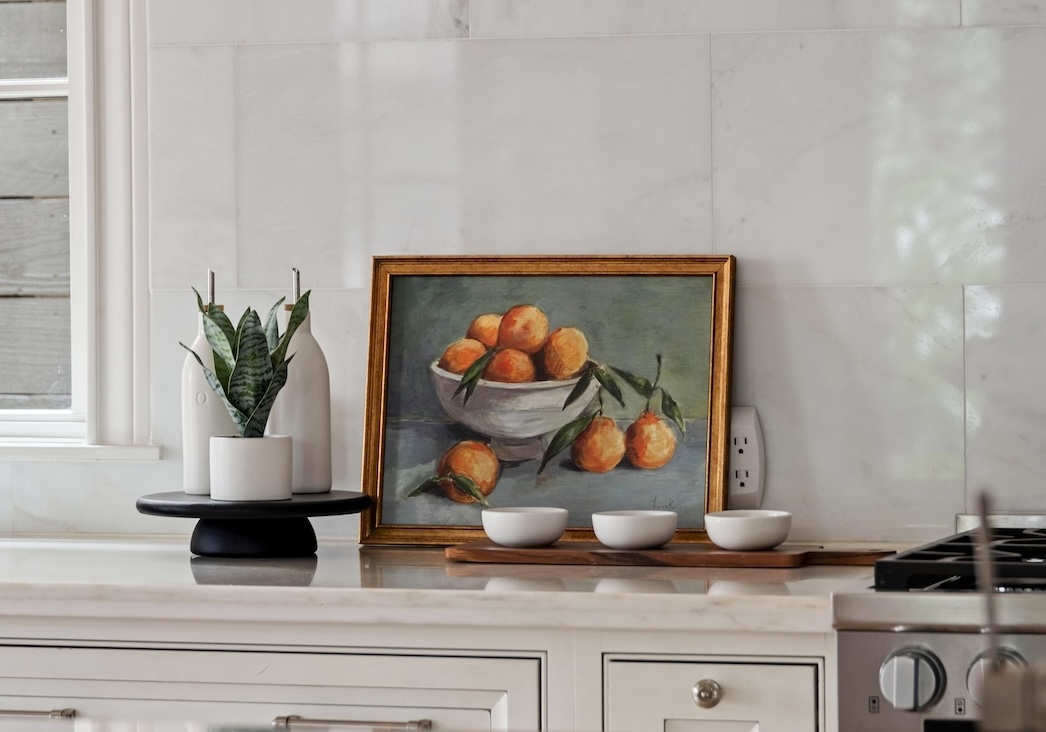
“Most kitchens are made up of the same sensory elements: glass, stone, metal, painted wood, and tile. That’s five hard, cold surfaces competing for attention, creating a sensory imbalance,” Nichole explains. “When a kitchen is overstyled or over-accessorized, you amplify that imbalance.”
Quiet luxury in the kitchen is about noticing that tension and softening it. It is less about adding something new and more about deciding what deserves to be seen. When styling is intentional, the eye has a place to rest. Light moves more naturally. The room feels calmer without ever feeling empty.
“So instead of adding more, we introduce calm, soft textures, tonal colors, and reflective elements that allow the architecture and light to do the talking,” Gamez noted.
This is where professional stagers instinctively work differently. Rather than decorating for impact, they style for experience, allowing subtle choices to guide how someone moves through the space and how long they linger. The result is not something you immediately point to, but something you feel the moment you step into the room.
Let the Counters Feel Intentional, Not Overdone
When you walk into a quietly luxurious kitchen, the countertops set the tone. There is space to see the material, space for light to move, and space for the room to feel settled. A few objects may remain, but they feel deliberate and well placed, not layered or decorative.
The result is a kitchen that feels easy to take in. The counters do not compete with the rest of the room, they quietly support it.
Add Warmth Through Texture and Natural Materials
Softness plays an important role in balancing kitchens dominated by stone and metal. Wood, ceramics, and organic textures introduce warmth without disrupting the overall palette.
Layered cutting boards, handmade bowls, and subtle greenery help the space feel grounded and approachable, reinforcing the sense that the kitchen is meant to be used, not just admired.
Use Height to Create Visual Movement
Vertical elements are one of the most effective tools in quiet luxury kitchen styling, yet they are often overlooked.
Tall glass vases with long stems appear throughout Nichole’s staging portfolio. When I asked her about it, she shared, “They are a Limewood signature.”
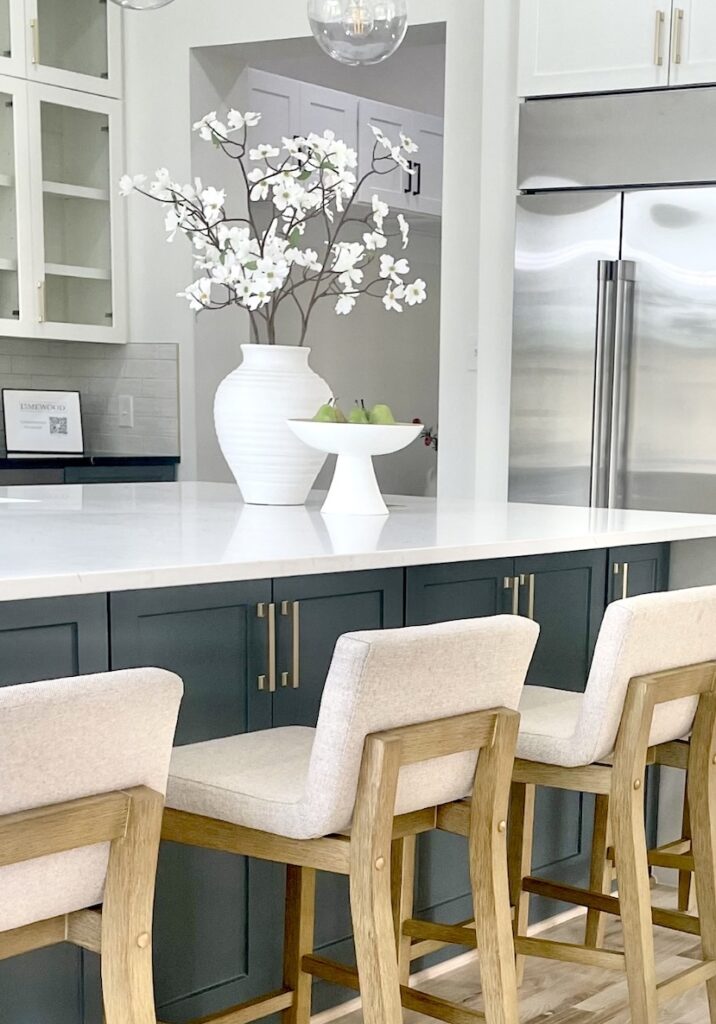
“They introduce vertical movement and light play, drawing the eye upward and visually elongating the space.”
By introducing height thoughtfully, the kitchen feels lighter and more dynamic without adding clutter. The movement is subtle, but it changes how the space is experienced.
Choose Objects for Shape, Not Display
Rather than relying on bold colors or decorative trends when selecting items for the kitchen, the focus should be shifted to selecting pieces for their form and silhouette.
Glassware, vessels, and functional objects are chosen for how they absorb or reflect light, play against surrounding surfaces, and hold their own within open space, not for visual impact alone.
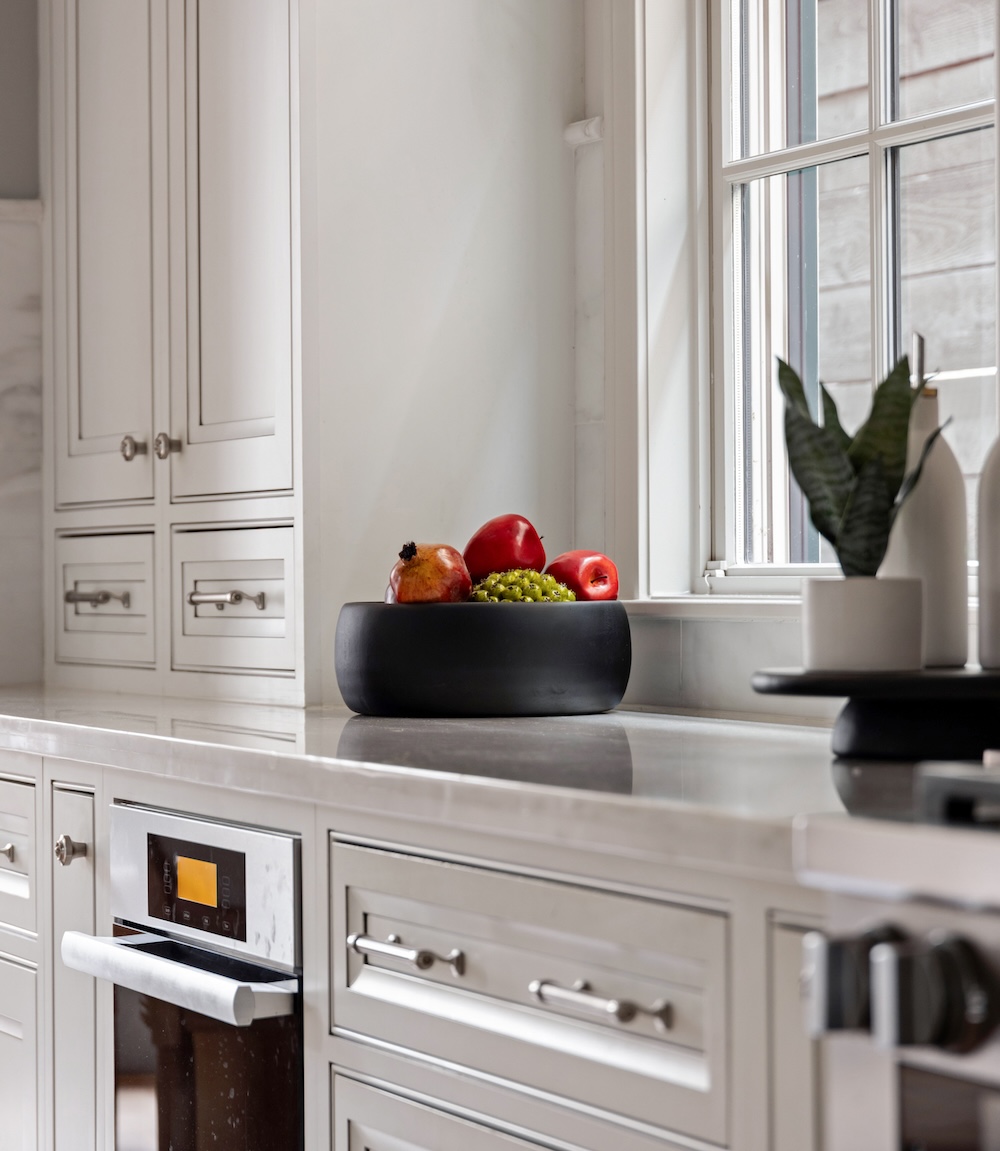
Nichole says, “It’s about choosing items that feel intentional, not decorative,” and that distinction is clearly reflected in how the space is styled. I asked Nichole to break down her choices in the kitchen photographed above, and she explained it clearly:
“We chose to use a single matte black bowl to anchor the counter, its sculptural form providing visual weight without asking for attention. The piece is not there to decorate the kitchen, but to give the eye a place to rest.
Rather than layering multiple accessories, the styling relies on form, scale, and contrast to do the work. The bowl’s grounded silhouette stands in quiet contrast to the lighter cabinetry and reflective surfaces around it, creating balance without visual noise. With so few objects present, the eye immediately understands what matters.”
Each element earns its place, and nothing competes for focus. The result is a kitchen moment that feels composed and confident, reinforcing the idea that quiet luxury is achieved not by adding more, but by choosing with purpose.
This approach keeps the kitchen feeling timeless and refined, allowing it to photograph beautifully while remaining emotionally inviting.
Style for Lifestyle, Not Perfection
Quiet luxury shows up in kitchens that feel easy to move through. Objects are placed where they make sense, not where they make a statement. Nothing looks precious. Nothing feels untouchable.
A cookbook within reach, a ceramic vessel meant to be used, a simple bowl adding weight to the counter. These choices feel natural rather than styled.
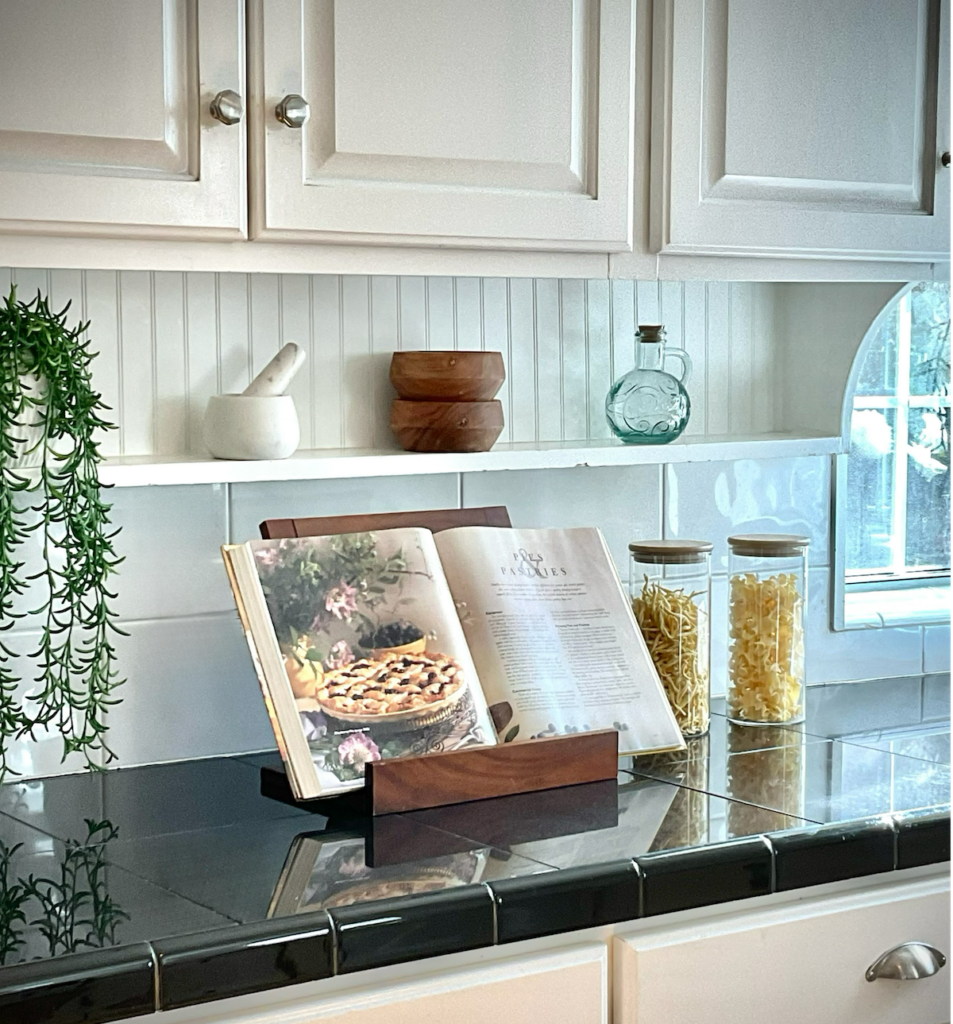
“The goal is to create a kitchen that feels like cooking is something to look forward to, not a chore,” Nichole says.
That sense of familiarity is what makes the space feel lived in.
Why This Approach Resonates
Quiet luxury kitchen styling does not rely on trends or dramatic changes. It works because it is rooted in how people experience space emotionally.
“When textures are balanced and visual noise is reduced, the nervous system relaxes,” Nichole explains. “Buyers may not know why they love the space, but they feel it.”
When kitchens feel calm, balanced, and intentional, buyers linger longer. They imagine themselves living there. The space feels right.
Shop the Quiet Luxury Look
Inspired by the quiet luxury kitchen styling featured here, Nichole Gamez curated a short list of versatile pieces that help recreate this calm, elevated feeling at home. Shop the curated list by the award-winning RESA® stager on Amazon.
Some of the links in this section may be affiliate links. If you choose to purchase through them, RESA® may earn a small commission at no additional cost to you, a great way to support the trade association for home stagers.

- Hutch Joins RESACON® as a First-Time Sponsor Bringing Business Software Built for Stagers - March 4, 2026
- How Operational Systems Help Scale a Home Staging Business: Why I Asked the Finessed Team to Lead This Conversation - March 3, 2026
- Record-Breaking Attendance at CREB: 121 Calgary Agents Attend RESA’s Staging to Sell Class - March 2, 2026

